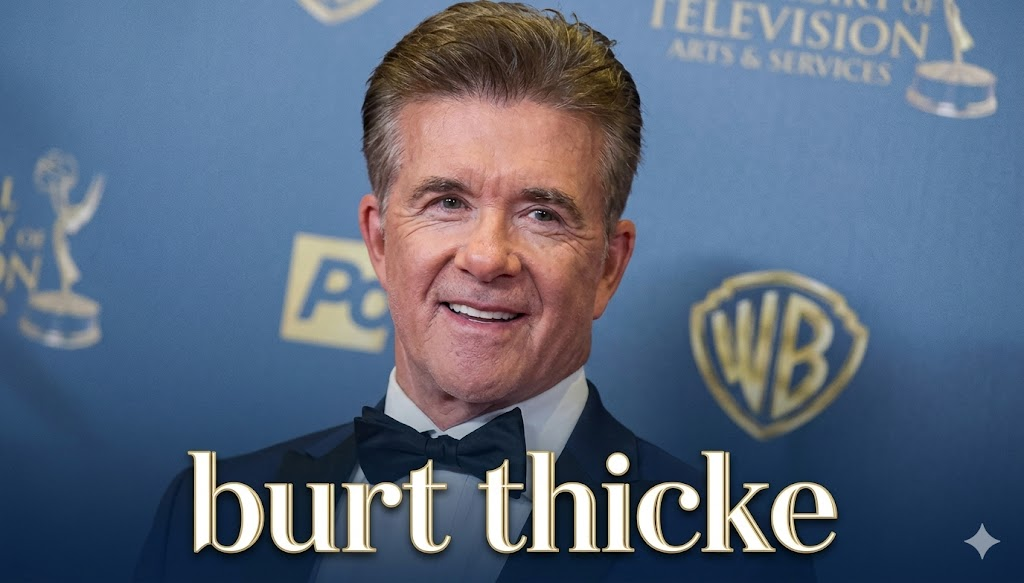
Discover everything about burt thicke — the man behind the name, the family legacy rooted in Kirkland Lake, Ontario, and how one quiet Canadian physician helped shape a multi-generational entertainment dynasty.
Who Is Burt Thicke? Understanding the Name Behind the Legend
When people type the name burt thicke into a search engine, they are rarely looking for the same person. The search pulls in multiple threads at once — a beloved Canadian-American television icon, a quiet physician from northern Ontario, a global pop music sensation, and even the ghost of a beloved Hollywood movie star. The result is one of the internet’s most fascinating identity puzzles, and unraveling it properly requires going back to the very beginning.
The name burt thicke sits at the crossroads of online curiosity and genuine cultural history. Some who search it are thinking of Alan Thicke, the warm and witty Canadian-American actor best known for playing Dr. Jason Seaver on the landmark ABC sitcom Growing Pains. Others are drawn in by the name’s resemblance to Burt Reynolds, the swaggering Hollywood legend whose dark hair, easy smile, and natural charisma made him one of the biggest box office draws of the late 1970s and early 1980s. And still others are looking for the real, quiet figure at the root of the Thicke family tree: Dr. Brian Thicke, the Ontario physician who gave Alan Thicke his surname — the very name that became known to millions of television viewers and later to music fans around the world.
This article covers all of it. We will trace the origin of burt thicke as a concept and as a person, explore the remarkable life of Alan Thicke in full, examine the extraordinary family dynasty that began in a small mining town in northern Ontario, and explain why this name continues to generate fascination, confusion, and genuine affection across the internet decades after it first entered public consciousness.
The Real Origin Story: Dr. Brian Thicke of Kirkland Lake
To understand burt thicke properly, you need to understand the man most directly responsible for the surname. His name was Dr. Brian Thicke — a physician practicing in Ontario, Canada during the mid-twentieth century. He is the stepfather of Alan Thicke and the foundational figure through whom the famous Thicke name was passed to future generations.
Alan was not born with the Thicke surname. He entered the world as Alan Willis Jeffrey on March 1, 1947, in Kirkland Lake, Ontario — a tight-knit, working-class mining community in the northeastern part of the province. His biological parents, William Jeffrey, a stockbroker, and Shirley “Joan” Isobel Marie Greer, a nurse, divorced in 1953 when Alan was just six years old. After the separation, his mother Joan remarried. Her second husband was a physician named Brian Thicke — the man widely referenced in contemporary online discussions as burt thicke.
Young Alan adopted his stepfather’s surname, and with that act, one of the most recognizable names in North American entertainment was set in motion. The family relocated to Elliot Lake, another Ontario town, where Alan was raised alongside his two half-siblings: writer-producer Todd Thicke and chiropractor Joanne Greer Thicke. Dr. Brian Thicke went on to serve as the medical director for Canada3000, a charter airline, continuing his distinguished career in medicine while quietly nurturing a household that would eventually produce some of the most influential talents in television and music history.
The town of Kirkland Lake itself played no small role in shaping the character of those who grew up there. A mining community built on hard work and communal loyalty, it instilled practical values in its residents — perseverance, discipline, and a deep sense of family. Those values formed the invisible scaffolding beneath Alan Thicke’s brilliant career, and they are traceable, ultimately, to the quiet influence of Dr. Brian Thicke.
Alan Thicke: From Kirkland Lake to Hollywood Icon
The boy who would eventually be known as Alan Thicke was, by all accounts, precociously talented from the very beginning. Bright enough to skip two school grades entirely, he was considered something of an outsider by his peers in his youth — too academic for the athletes, too creative for the conventional students. But whenever a school talent show was organized, there was one person everyone agreed should host it: Alan.
He graduated from Elliot Lake Secondary School in 1965, where he was elected Homecoming King, and went on to study English and Psychology at the University of Western Ontario, where he joined the Delta Upsilon fraternity. While still a student, he landed his own late-night music show at the campus radio station, an experience that planted the seeds of his future broadcasting career. His grandmother had played piano to accompany silent films, his mother was a tap dancer, and his brother Todd would go on to become an Emmy-nominated television writer. Creativity ran through the family like a current.
After graduating in 1967, Alan began his professional career with the Canadian Broadcasting Corporation (CBC), where he worked across a wide range of projects and developed the versatile skill set that would define his career. He was not content to be just one thing. From the very beginning, he was simultaneously a writer, a composer, a performer, and a host — qualities that made him almost uniquely suited to the broad demands of the entertainment industry.
The Rise of a Television Multitasker
Alan Thicke’s first major breakthrough in Canada came through hosting. He helmed The Alan Thicke Show, a daytime talk program that ran from 1980 to 1983 and became one of the most watched programs in Canadian television history. His easy charm, quick wit, and ability to put both guests and audiences at ease made the show a consistent success. Behind the camera, he was equally productive: he co-wrote the instantly recognizable theme songs for two of NBC’s most enduring sitcoms — Diff’rent Strokes (1978–1986) and The Facts of Life (1979–1988) — working alongside his then-wife, actress and singer Gloria Loring. He also composed the original score for Wheel of Fortune and contributed themes to a string of game shows throughout the 1970s.
His American television debut came in September 1983 with Thicke of the Night, a syndicated late-night talk show that he not only hosted but also wrote, produced, and composed for. The show was a critical and commercial disappointment — a well-documented flop that could have ended his American ambitions before they truly began. Instead, Alan responded with characteristic resilience. He took a dramatic turn in the 1984 television film The Calendar Girl Murders, playing a villainous photographer so convincingly that Hollywood producers began to see him in a new light entirely.
That pivot opened the door to what would become the defining role of his career.
Growing Pains and the Making of Dr. Jason Seaver
In 1985, Alan Thicke was cast as Dr. Jason Roland Seaver in the ABC sitcom Growing Pains, and everything changed. The show followed a two-income household in which Dr. Seaver, a psychiatrist and devoted father, moved his practice into the family home so that he could be more present for his journalist wife Maggie (played by Joanna Kerns) and their children. It was a premise that felt genuinely modern for its time, and it resonated with audiences across the country.
Growing Pains debuted in September 1985 and ran for seven seasons, ending in April 1992. It consistently ranked among the top 20 most-watched programs on American network television, climbing as high as No. 5 in the 1987–88 season. For his performance as Jason Seaver, Alan received a Golden Globe nomination in 1988. TV Guide later ranked Dr. Seaver as the 37th greatest television dad of all time.
The show’s cast was remarkable. Kirk Cameron played eldest son Mike Seaver and became one of the most prominent teen magazine phenomena of the decade. A young Leonardo DiCaprio joined the cast in its later seasons. Alan himself once noted that the line between his real life and his television character felt remarkably thin: during the filming of Growing Pains, he was actively raising his own oldest sons, Brennan and Robin, and he drew constantly on those experiences to inform his portrayal of Jason Seaver. When Alan Thicke played a loving, humorous, and emotionally present father on screen, he was drawing from the same wells of warmth and dedication that had filled his actual home.
Alan reprised the Jason Seaver role in two reunion television films: The Growing Pains Movie (2000) and Growing Pains: Return of the Seavers (2004), demonstrating the enduring affection audiences had for the character and for the man who played him.
Beyond Growing Pains: A Career Without Boundaries
What makes the story of burt thicke — and the life of Alan Thicke — so compelling is the sheer breadth and depth of his career beyond his signature role. Alan Thicke was not a one-show actor. He was a Renaissance man of television in the fullest sense of the term.
He co-hosted the Walt Disney World Very Merry Christmas Parade with Joan Lunden from 1983 to 1990. He hosted the Miss USA Pageant in 1988. He hosted Animal Miracles on the Pax TV network from 2001 to 2003 and Celebrity Cooking Showdown on NBC in 2006. He played the recurring character Rich Ginger on the long-running soap opera The Bold and the Beautiful from 2006 to 2009. He appeared in guest roles across dozens of beloved American television series, from Murder, She Wrote to 7th Heaven, from Married with Children to Fuller House. He even performed as Billy Flynn in the Los Angeles and national touring companies of the musical Chicago.
As an author, he wrote two books that reflected his characteristic humor and deep engagement with fatherhood: How Men Have Babies: The Pregnant Father’s Survival Guide (1999) and How to Raise Kids Who Won’t Hate You: Family Wisdom and Humor from a Favorite TV Dad (2006). He was named Father of the Year by the Father’s Day Council of Los Angeles, the Muscular Dystrophy Association, and the Juvenile Diabetes Foundation. In 2013, he was inducted into Canada’s Walk of Fame, one of his country’s highest cultural honors. He was inducted into the Brampton Arts Walk of Fame in 2015.
He was, in the words of TV Insider, a man of “one of the most eclectic résumés in show business.” Even his death — which occurred on December 13, 2016, while he was playing ice hockey with his son Carter at Pickwick Gardens in Burbank, California — was simultaneously, as one tribute noted, “very fatherly and very Canadian,” the two qualities that most defined his entire life.
The Name Confusion: Why People Search for Burt Thicke
Understanding why so many people search for burt thicke requires understanding the mechanics of memory, association, and the particular texture of popular culture in the 1980s.
Alan Thicke and Burt Reynolds were, during the peak of their respective careers, two of the most recognizable men in American popular entertainment. Both were physically striking — dark-haired, broad-smiled, and radiating an easy confidence that audiences found deeply reassuring. Both projected warmth without weakness. Both were ubiquitous in the 1980s, appearing on television screens, movie screens, and talk show couches with remarkable frequency. And both occupied the same emotional register in the public imagination: they were men you trusted, men who made you feel comfortable, men who seemed to represent a certain reliable version of American masculinity.
Burt Reynolds, born in Lansing, Michigan in 1936, had become a genuine cultural phenomenon by the late 1970s. Smokey and the Bandit (1977) made him a legend. His Trans Am, his mustache, and that unforgettable grin placed him at the very top of the Hollywood box office for several years running. He was the embodiment of a particular kind of effortless cool — and he shared a remarkable amount of cultural space with Alan Thicke. keine karriere subdomain gefunden
The connection deepened in unexpected ways. The 1989 animated film All Dogs Go to Heaven, which featured Burt Reynolds voicing the lead character, also starred the voice of Judith Barsi — a child actress who had appeared in a recurring role on Growing Pains, Alan Thicke’s show. The overlap was not just coincidence; it was a reflection of how deeply both men were woven into the same fabric of late-1980s entertainment.
The name itself completes the puzzle. “Burt” is a familiar, solid, one-syllable name that recalls Reynolds immediately. “Thicke” is unusual enough to be memorable and is firmly associated with Alan. The combination — burt thicke — sounds entirely plausible to anyone who grew up watching both men and has since merged their memories in the way that the human brain inevitably does with beloved figures from the past.
Robin Thicke: The Dynasty Continues
The legacy of burt thicke — and of Dr. Brian Thicke, and of Alan Thicke — did not end with Alan’s extraordinary career. It continued, and arguably expanded, through his son Robin Thicke.
Robin Alan Thicke was born on March 10, 1977, in Los Angeles, California. His parents were Alan Thicke and actress and singer Gloria Loring, whom Alan had married on August 22, 1970. The couple divorced in 1984 when Robin was seven years old. He has an older brother, Brennan Thicke, who worked as a voice actor and voiced the title character in the animated Dennis the Menace series, and a younger half-brother, Carter William Thicke, born from Alan’s second marriage to Gina Marie Tolleson, Miss World 1990.
Robin grew up in an environment saturated with creativity, talent, and professional ambition. His father helped him write and structure his earliest songs. His mother’s career in music and television surrounded him with industry knowledge from infancy. By his early teens, Robin was already performing with a vocal group called As One and pursuing a career in music with extraordinary seriousness. When Alan refused to fund a professionally produced demo tape for the teenage group — believing it was important for Robin to develop resilience and independence — Robin found another path: the demo was ultimately funded by jazz vocalist Al Jarreau, an uncle of one of the group’s members.
That demo reached R&B singer Brian McKnight, who was so impressed that he invited Robin into the studio and signed him to his production company. McKnight became one of Robin’s earliest and most influential mentors, and the relationship led, in turn, to a recording contract with Interscope Records at the astonishing age of sixteen. Robin spent his late teens and early twenties building a reputation as a songwriter and producer for other artists before releasing his own music. He wrote for Brandy, Color Me Badd, 3T, Marc Anthony, Christina Aguilera, Mya, Pink, and Jordan Knight, among many others.
Robin’s Breakthrough and Global Success
Robin Thicke’s solo recording career began in earnest with his debut album A Beautiful World (2001), released under Interscope Records. Though commercially modest, it established him as a distinctive voice in the blue-eyed soul tradition. His second album, The Evolution of Robin Thicke (2006), released through Pharrell Williams’ Star Trak Entertainment, was a commercial breakthrough, debuting at number five on the Billboard 200 and generating the single “Lost Without U,” which reached number 14 on the Billboard Hot 100. Subsequent albums — Something Else (2007), Sex Therapy: The Session (2008), and Love After War (2011) — further cemented his reputation as a major figure in contemporary R&B.
Then came Blurred Lines. Released in 2013, the song featuring T.I. and Pharrell Williams became one of the best-selling singles of all time. It reached number one in over 25 countries, topped the Billboard Hot 100, received Diamond certification from the RIAA, and earned Grammy nominations for Record of the Year and Best Pop Duo/Group Performance at the 56th Annual Grammy Awards. The accompanying album also debuted at the top of both the Billboard 200 and the UK Albums Chart simultaneously. Since 2019, Robin Thicke has served as a panelist on the Fox musical competition series The Masked Singer, bringing the Thicke family presence back to mainstream American television in a new form for a new generation.
The Family Tree: Three Generations of the Thicke Legacy
The story of burt thicke is, at its heart, a story about intergenerational influence — how values, work ethic, and creative ambition pass from one person to the next across decades.
| Generation | Person | Contribution |
|---|---|---|
| Foundation | Dr. Brian (“Burt”) Thicke | Gave Alan the Thicke surname; instilled discipline and stability |
| Second | Alan Thicke | Television icon, songwriter, author, cultural figure |
| Second | Todd Thicke | Emmy-nominated writer, executive producer of America’s Funniest Home Videos |
| Third | Robin Thicke | Global R&B and pop superstar; Blurred Lines remains one of the best-selling singles ever |
| Third | Brennan Thicke | Voice actor; voiced the lead in animated Dennis the Menace |
| Third | Carter William Thicke | Son of Alan and Gina Marie Tolleson |
The family tree reflects a consistency of creative engagement across generations that is genuinely rare. Dr. Brian Thicke may have worked in medicine rather than entertainment, but the household he helped create in Elliot Lake and Kirkland Lake — structured, warm, curious, and ambitious — provided the soil in which that creativity could take root and grow.
Alan Thicke’s Personal Life and Marriages
Alan Thicke was married three times. His first marriage, to actress and singer Gloria Loring on August 22, 1970, produced two sons: Brennan and Robin. The couple divorced in 1984. His second marriage, to Gina Marie Tolleson, Miss World 1990, took place on August 13, 1994, and produced one son, Carter William Thicke, before ending in divorce in 1999. On May 7, 2005, Alan married his third wife, model Tanya Callau, who survived him.
Despite the transitions in his romantic life, Alan was consistently described by friends, colleagues, and family as a deeply devoted father. He was named Father of the Year by multiple organizations. His book How to Raise Kids Who Won’t Hate You distilled decades of real-world parenting experience with his characteristic blend of genuine warmth and self-deprecating humor. His friendships were legendary in their own right: Wayne Gretzky, Bob Saget, Leonardo DiCaprio, Joanna Kerns, Kirk Cameron, and Alex Trebek were among the closest figures in his personal circle.
He hosted Wayne Gretzky’s wedding in Edmonton, Canada. He once jokingly referred to himself as “the affordable Shatner,” acknowledging that much of his later career involved hosting engagements — parades, beauty pageants, charity events — that were routinely declined by his fellow Canadian William Shatner.
Alan Thicke was also a passionate hockey player, an activity he maintained throughout his life and that was, ultimately, the setting of his death. He collapsed while playing ice hockey with his son Carter on December 13, 2016, and died later that day of a Type-A aortic dissection at Providence Saint Joseph Medical Center in Burbank, California. He was 69 years old. On December 19, 2016, the cast of Growing Pains reunited at his funeral, at which Bob Saget delivered a eulogy and Robin Thicke offered a humorous and heartfelt remembrance. He was buried at Santa Barbara Cemetery in Santa Barbara, California.
Why the Burt Thicke Story Matters in Digital Culture
The phenomenon of burt thicke is, on one level, a straightforward case of name confusion. But on another level, it is a genuinely revealing window into how digital culture processes memory, nostalgia, and celebrity. The internet does not simply reflect public knowledge — it amplifies it, distorts it, and creates new patterns of association that take on a life of their own.
A name can begin appearing on blogs, get repeated across entertainment sites, and slowly accumulate the texture of a documented biography even when the underlying evidence is thin or contested. The case of burt thicke illustrates this process vividly. What started as a crossed wire between two beloved pop culture figures has become a genuine topic of inquiry, generating thousands of monthly searches and dozens of articles attempting to make sense of it.
What those searches consistently reveal, however, is not confusion — but connection. People are reaching for something real when they type burt thicke into a search bar. They are reaching for the warmth of Dr. Jason Seaver, the swagger of Burt Reynolds, the quiet dignity of a Canadian physician who gave his stepson a name that echoed through decades of television and music. They are reaching for the joy of Growing Pains, the electricity of “Blurred Lines,” the feeling of watching something on television as a child that made the world seem safe and entertaining and full of possibility.
That is not confusion. That is memory. And memory, especially in its most affectionate forms, deserves to be honored accurately.
The Thicke Brothers: Todd and the Extended Family Legacy
While Robin Thicke is the most globally famous member of the second generation, Alan’s brother Todd Thicke — Alan’s half-sibling through Dr. Brian Thicke — built an equally distinguished career in a less visible but no less significant corner of the entertainment industry. Todd Thicke is an Emmy-nominated television writer who served as executive producer and head writer for America’s Funniest Home Videos, one of the longest-running and most-watched programs in the history of American network television.
The fact that both Alan and Todd built remarkable careers in television — one in front of the camera, one behind it — speaks to the creative environment that Dr. Brian Thicke’s household fostered. The Thicke household in Elliot Lake was clearly one in which imagination was valued, ambition was encouraged, and the entertainment industry was not treated as a frivolous aspiration but as a legitimate and worthy profession.
The combined legacy of all these figures — physician, actor, writer, musician — forms a portrait of a family that understood creativity as a kind of discipline, and discipline as a form of love.
Alan Thicke’s Awards, Honors, and Recognition
Despite never winning a major competitive award, Alan Thicke accumulated a body of recognition that reflected both his professional standing and the deep affection in which he was held by the entertainment industry and the public alike.
He received a Golden Globe nomination for Best Actor in a Musical or Comedy Series for his work on Growing Pains in 1988. He earned six Emmy nominations throughout his career. He was inducted into Canada’s Walk of Fame in 2013, one of the country’s most prestigious cultural honors. He was inducted into the Brampton Arts Walk of Fame in 2015. His character Dr. Jason Seaver was ranked among the greatest television fathers of all time by TV Guide. He was named Father of the Year by multiple national organizations. His theme songs for Diff’rent Strokes and The Facts of Life remain among the most recognizable in the history of American television.
None of these recognitions fully capture what Alan Thicke meant to the people who watched him. The truest measure of his legacy is not found in trophies or plaques but in the emotional warmth with which audiences continue to remember him — a warmth that is, in its own quiet way, the deepest form of influence.
FAQs About Burt Thicke
Who exactly is burt thicke?
The name burt thicke refers to multiple overlapping figures in popular culture. Most commonly, it is used in reference to Alan Thicke, the Canadian-American actor, songwriter, and television host best known for playing Dr. Jason Seaver on Growing Pains. In a more historically precise sense, it points to Dr. Brian Thicke, Alan’s stepfather — the Ontario physician who gave Alan the Thicke surname. The name also arises from the widespread online blending of Alan Thicke with Burt Reynolds, two beloved entertainers of the 1980s whose visual and cultural profiles overlapped significantly in public memory.
What is the relationship between burt thicke and Alan Thicke?
Dr. Brian Thicke — widely referenced as burt thicke in online discussions — was the stepfather of Alan Thicke. After Alan’s biological parents divorced in 1953, his mother Joan remarried Dr. Brian Thicke. Young Alan adopted his stepfather’s surname, which then became one of the most recognized names in North American entertainment history.
Why do people confuse Alan Thicke with Burt Reynolds?
Both Alan Thicke and Burt Reynolds were prominent, dark-haired, warm-smiled American entertainers who occupied enormous cultural space simultaneously in the 1980s. They shared a visual profile, an emotional register, and an extraordinary level of media visibility. Their names — “Burt” from Reynolds, “Thicke” from Alan — fused in public memory to produce the compound “Burt Thicke,” a name that sounds entirely plausible but does not correspond to any single historical person.
Is Robin Thicke related to burt thicke?
Yes, in the most meaningful sense. Robin Thicke is Alan Thicke’s son and Dr. Brian Thicke’s step-grandson. Robin was born on March 10, 1977, in Los Angeles, California, to Alan Thicke and actress and singer Gloria Loring. He went on to become one of the most successful R&B and pop artists of the 21st century, with his 2013 single “Blurred Lines” becoming one of the best-selling songs of all time.
What was Alan Thicke’s most famous role?
Alan Thicke is best remembered for playing Dr. Jason Roland Seaver, a psychiatrist and devoted family man, on the ABC sitcom Growing Pains, which ran from 1985 to 1992. The character was ranked among the greatest television fathers of all time by TV Guide and earned Alan a Golden Globe nomination in 1988.
What theme songs did Alan Thicke write?
Alan Thicke, working alongside his then-wife Gloria Loring, composed the theme songs for Diff’rent Strokes (1978–1986) and The Facts of Life (1979–1988), both for NBC. He also composed the original score for Wheel of Fortune and contributed themes to numerous other game shows throughout the 1970s.
When did Alan Thicke die?
Alan Thicke died on December 13, 2016, in Burbank, California, at the age of 69. He suffered a Type-A aortic dissection while playing ice hockey with his son Carter at Pickwick Gardens in Burbank. He was buried at Santa Barbara Cemetery in Santa Barbara, California.
Was Alan Thicke inducted into Canada’s Walk of Fame?
Yes. Alan Thicke was inducted into Canada’s Walk of Fame in 2013 and into the Brampton Arts Walk of Fame in 2015, recognizing his extraordinary contributions to Canadian and North American entertainment over more than four decades.
What is the difference between Burt Reynolds and burt thicke?
Burt Reynolds was a real and historically documented Hollywood actor and cultural phenomenon, born in 1936 and famous for films including Smokey and the Bandit (1977). Burt thicke, as a combined name, is not a real person — it is a name that emerged from the widespread conflation of Burt Reynolds and Alan Thicke in popular memory, driven by their simultaneous prominence in 1980s entertainment and their overlapping visual and cultural identities.
Did Robin Thicke grow up knowing about his family legacy?
Robin Thicke grew up immersed in the entertainment world from birth. His father Alan was one of television’s most recognized figures, and his mother Gloria Loring was an accomplished actress and singer. Alan directly helped Robin write and structure his earliest songs, and the family environment was one in which creative ambition was both modeled and encouraged at every turn.
Conclusion: The Quiet Roots of a Legendary Name
The story of burt thicke is ultimately a story about how legacies are built — not always in spotlights or on stages, but sometimes in living rooms and medical offices and small towns in northern Ontario where a physician chooses to give his stepson his name, and that name becomes, through talent and determination and extraordinary generosity of spirit, one of the most cherished in the history of North American entertainment.
Dr. Brian Thicke gave Alan a surname. Alan gave that surname a meaning that resonated with millions of viewers, listeners, and fellow artists across six decades. Robin carried it forward into the 21st century with a musical legacy of his own. Todd wove it into the fabric of American television from behind the camera. The entire dynasty — stretching from a mining town in Kirkland Lake to the stages of the world — begins with a quiet act of family: a doctor, a surname, and a child with extraordinary things ahead of him.
Whether you searched for burt thicke because you remembered Growing Pains, because you heard “Blurred Lines” on the radio, because you dimly recalled Burt Reynolds and Alan Thicke from the same era of your childhood and your memory did what memories do, or because you simply wanted to understand the name — the story you have found is real, rich, and worth knowing in full.
That is the legacy of burt thicke. That is the legacy of the Thicke family. And it is, by any measure, a remarkable one.