In a world where corporate executives typically arrive via prestigious MBA programs, consulting firms, or finance backgrounds, claude edward elkins jr stands as a genuinely rare exception. He is the kind of leader who didn’t begin his career in a boardroom — he began it on the tracks, in all weather conditions, doing the hard physical work that most Fortune 500 executives have never experienced. Today, he serves as Executive Vice President and Chief Commercial Officer of Norfolk Southern Corporation, one of the largest freight rail networks in North America. His story is not just about professional success; it is a detailed roadmap of what happens when determination, continuous education, and operational humility intersect over the course of three decades.
This comprehensive article examines every significant chapter of his life and career — from his Appalachian upbringing to military service, from the rail yard to the executive suite — while extracting the leadership lessons and career principles that make his journey so universally instructive.
Who Is Ed Elkins? A Profile of a Modern Railroad Leader
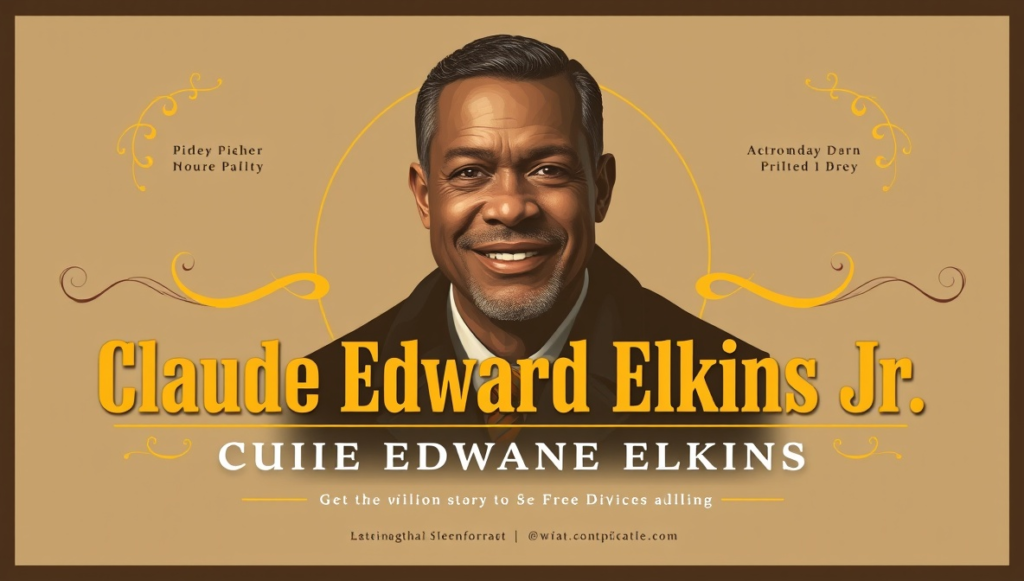
Claude Edward Elkins Jr, widely known in professional circles as Ed Elkins, is an American business executive whose career exemplifies the blend of operational expertise, strategic vision, and leadership required in modern freight transportation. He currently occupies one of the most strategically consequential roles in American rail — steering commercial strategy, customer partnerships, pricing frameworks, and intermodal growth for a company whose freight network spans the eastern United States.
What separates him from countless other executives in the transportation and logistics sector is the depth of his frontline experience. Before he was developing commercial strategy for a Fortune 500 railroad, he was coupling and uncoupling railcars in the rain, operating locomotives across hundreds of miles of track, and managing the controlled chaos of a busy rail yard. This ground-level knowledge doesn’t just inform his leadership style — it defines it.
Currently serving as the Executive Vice President and Chief Commercial Officer of Norfolk Southern Corporation, Elkins represents a unique archetype in modern business: the leader who climbed from the ground floor to the boardroom. His journey from a road brakeman in the late 1980s to leading commercial strategy for a Fortune 500 transportation giant offers profound lessons in grit, adaptability, and the value of operational experience.
| Quick Profile | Details |
|---|---|
| Full Name | Claude Edward “Ed” Elkins Jr. |
| Place of Origin | Southwest Virginia, USA |
| Military Service | United States Marine Corps (Veteran) |
| Education | B.A. in English, University of Virginia’s College at Wise; MBA in Port & Maritime Economics, Old Dominion University; Executive programs at Harvard Business School, UVA Darden, University of Tennessee Supply Chain Institute |
| Career Start | Norfolk Southern, 1988 (Road Brakeman) |
| Current Role | Executive Vice President & Chief Commercial Officer, Norfolk Southern |
| Industry Boards | Georgia Chamber of Commerce, National Association of Manufacturers, East Lake Foundation, TTX Company |
| Known For | Brakeman-to-boardroom career trajectory; operational leadership; intermodal strategy |
Early Life and Roots in Southwest Virginia
Claude Edward Elkins Jr.’s was raised in Southwest Virginia, a region where the railroads were a vital part of the community’s economy. His upbringing in this area instilled values of discipline, resilience, and a deep respect for hard work. In a town where jobs were often demanding and physical, Elkins learned the importance of perseverance and commitment early on.
Southwest Virginia is Appalachian country — a region defined by its industrial heritage, close-knit communities, and an economy historically anchored in coal mining, timber, and freight transportation. Growing up in this environment was formative in ways that no classroom could replicate. The rhythms of work and community in that part of the country shaped his fundamental orientation toward effort, reliability, and respect for people doing demanding jobs.
Claude Edward Elkins Jr was born and raised in the Appalachian region of Virginia, an area rich in history and deeply connected to the railroad industry. His early experiences shaped his appreciation for hard work and resilience — values that later defined his career. After completing high school, he pursued a Bachelor’s degree in English at the University of Virginia’s College at Wise.
The choice to study English literature at the University of Virginia’s College at Wise is worth examining closely. In an era when corporate-minded students typically gravitate toward business or economics, choosing English signaled something important about the man’s intellectual inclinations — a commitment to critical thinking, nuanced communication, and the kind of analytical skills that come from deep engagement with language and argument. Academically, he distinguished himself at the University of Virginia’s College at Wise, graduating magna cum laude, before earning his MBA from Old Dominion University. His educational path mirrors his career: grounded, determined, and defined by upward progression.
This combination of a humanities education with subsequent graduate business training produced a well-rounded intellect capable of connecting data-driven strategy with human-centered communication — an increasingly rare skill in the logistics industry.
Military Service and the Formation of Character
Before claude edward elkins jr ever set foot in a rail yard, he served in the United States Marine Corps. This chapter of his life, though rarely the headline in profiles about his railroad achievements, is foundational to understanding who he is as a leader and decision-maker.
Before embarking on his railroad career, Elkins served in the United States Marine Corps. His time in the Marines reinforced key values such as discipline, accountability, teamwork, and leadership under pressure. This experience shaped his professional mindset, instilling a commitment to excellence and the ability to make sound decisions in high-stakes environments.
The Marine Corps produces a very specific kind of professional — one who understands the meaning of earned authority, who is comfortable operating in ambiguous high-pressure situations, and who views leadership not as a privilege of rank but as a responsibility of service. These are not abstract virtues. In the context of a freight railroad — where safety protocols are literally life-and-death matters, where split-second decisions in a rail yard can determine whether a crew member goes home safely — the instincts formed in military service translate with remarkable precision.
The Marine Corps builds a specific kind of leader — one who operates under pressure without losing precision, who earns authority through demonstrated competence rather than rank alone.
For claude edward elkins jr, military service wasn’t a detour before his “real” career began — it was the foundation upon which his real career was built. The values of integrity, team cohesion, and mission focus that the Marines instill aligned seamlessly with the demands of frontline railroad operations, where crew coordination, safety compliance, and operational precision are non-negotiable.
Joining Norfolk Southern: The Beginning of a Railroad Career
In 1988, claude edward elkins jr joined Norfolk Southern Corporation in what would become one of the most enduring and consequential careers in American railroad history. He didn’t join as a junior analyst or management trainee. He joined as a road brakeman.
Elkins joined Norfolk Southern in 1988, starting his career at the operational level. His first role as a road brakeman involved physically demanding tasks including coupling and uncoupling rail cars, inspecting trains, and ensuring adherence to strict safety protocols. This early exposure to the operational intricacies of railroad logistics provided him with an intimate understanding of day-to-day rail operations.
A road brakeman’s job is not glamorous. It involves working in extreme weather, dealing with heavy equipment, maintaining constant situational awareness, and operating within an environment where the consequences of errors can be catastrophic. Workers in these roles develop a visceral understanding of logistics — not the spreadsheet version, but the real-world version, where delays have causes, equipment has limitations, and the human beings doing the work have both capabilities and constraints that no strategy document fully captures.
If there’s anything that underlines Elkins’s authenticity as a leader, it’s his beginning in railroad operations. Claude Edward Elkins Jr joined Norfolk Southern as a road brakeman in 1988. It was a hands-on, physically demanding job that’s all about coupling and uncoupling railcars. He also used to inspect equipment to keep trains moving safely and on time. A road brakeman’s job might not be a glamorous role, but duties like these build grit in you. It also planted Elkins right in the heart of the railroad’s everyday challenges, far from an office view.
He subsequently advanced to conductor — coordinating train crews and managing movement across the rail network — and then to locomotive engineer, responsible for safely operating trains over long distances. He also served as a relief yardmaster, managing the complex operational logistics of busy rail yards, overseeing crew assignments and coordinating the movement of dozens of cars simultaneously.
By the time he transitioned away from direct operations, claude edward elkins jr had spent years doing the foundational work of the railroad. He had operated equipment, managed safety-critical procedures, supervised crews under pressure, and developed the kind of practical knowledge that textbooks cannot provide. This foundation would prove extraordinarily valuable in every subsequent role he took on.
Graduate Education and Strategic Investment in Knowledge
Even while building deep operational experience at Norfolk Southern, claude edward elkins jr understood that knowledge acquisition could not stop with on-the-job learning. His decision to pursue graduate education represents a significant personal investment — both in time and intellectual effort — and speaks to the kind of long-view thinking that characterizes his approach to career development.
To complement his humanities background, Elkins pursued a Master of Business Administration (MBA) with a concentration in Port and Maritime Economics. This advanced study deepened his understanding of global logistics, intermodal transportation, and economic frameworks affecting both the rail and shipping industries. Additionally, he has participated in executive leadership programs at leading institutions such as Harvard Business School and the University of Tennessee Supply Chain Institute.
The specific focus of his MBA — Port and Maritime Economics — was a deliberate and strategic choice. Intermodal transportation, which involves moving freight containers seamlessly across rail, shipping, and trucking networks, was becoming increasingly central to the global supply chain. By grounding himself in the economics of maritime and port operations, Elkins developed fluency in the full intermodal picture at a time when most railroad executives were still thinking primarily in terms of point-to-point rail movement.
The MBA in Port and Maritime Economics at Old Dominion University was a deliberate pivot. It grounded him in transportation economics, supply chain management, and logistics — the core mechanics of the railroad industry. That technical fluency in maritime and port economics gave Norfolk Southern an executive who genuinely understood the intermodal supply chain, not just its surface-level operations. Later-career programs at Harvard Business School, UVA Darden School of Business, and the University of Tennessee Supply Chain Institute deepened his management expertise. These weren’t resume checkboxes — they reflected a pattern of continuous investment in practical knowledge throughout a career already rich in operational experience.
The combination of frontline railroad operations experience and rigorous graduate-level education in supply chain economics placed him in an exceptionally small category of professionals: those who genuinely understood both the physical reality of rail operations and the strategic economic frameworks shaping the transportation industry’s evolution. afruimwagens
The Transition from Operations to Commercial Leadership
After nearly two decades of operational experience, claude edward elkins jr made a pivotal career transition: from the world of running trains to the world of selling transportation services and building strategic customer relationships. This transition — from operations to commercial leadership — is genuinely difficult for most railroad professionals, because the skills required are fundamentally different.
After nearly two decades of operational work, Elkins transitioned to commercial and strategic positions within Norfolk Southern. This shift marked a move from managing rail operations to managing the company’s customer relationships, market positioning, and revenue growth. He first entered intermodal marketing, where he coordinated complex freight solutions spanning rail, trucking, and maritime transport.
In intermodal marketing, he spent roughly two decades developing an intimate understanding of how businesses think about their freight needs, what they value in a transportation partner, and how to construct solutions that work across the complex multi-modal supply chain. This was not just sales work — it was sophisticated commercial strategy that required deep knowledge of industries ranging from automotive to chemicals to agricultural commodities.
In the railroad industry, there is often friction between “Operations” (running trains) and “Sales” (promising delivery). Elkins bridges this gap. Because he was an engineer, he knows what promises the railroad can realistically keep. This builds immense trust with high-value clients who rely on rail for their supply chains.
This bridge-building capacity — the ability to make commercial promises that operations can actually deliver — is among the most valuable skills a commercial leader in the transportation industry can possess. Customers who depend on Norfolk Southern for their supply chains need certainty. When an executive who once operated those trains tells them what the railroad can deliver, that credibility is not manufactured. It is earned.
His commercial roles expanded progressively. He took on leadership in Automotive Logistics, overseeing the transportation of vehicles across Norfolk Southern’s network. He led Industrial Products, managing the complex freight relationships with manufacturing customers across multiple commodity categories. Each role deepened his understanding of what diverse industries need from a freight transportation partner.
Ascending to Group Vice President: Chemicals Marketing and Industrial Products
The next major chapter in the career of claude edward elkins jr involved moving into Group Vice President-level leadership, first in Chemicals Marketing and then in Industrial Products. These were significant milestones — his first senior executive roles with genuine P&L responsibility and the kind of strategic scope that would prepare him for the Chief Commercial Officer role to come.
In 2016, he became Group Vice President of Chemicals Marketing followed by Vice President of Industrial Products in 2018. In 2021 he was promoted to Executive Vice President & Chief Commercial Officer overseeing major business divisions.
The chemicals sector in railroad freight is enormously complex and commercially significant. Chemical shipments represent a major revenue stream for Class I railroads, requiring specialized equipment, strict safety compliance, and deep customer relationships with some of the largest industrial companies in the United States. Leading this business segment demanded both technical knowledge and strategic sophistication — precisely the combination he had been building throughout his career.
His tenure in Industrial Products similarly required him to manage relationships across a diverse range of manufacturing industries, each with distinct logistics requirements, seasonal patterns, and competitive pressures from alternative transportation modes. Successfully growing and retaining these customer relationships meant understanding their businesses deeply enough to design transportation solutions that genuinely added value — not just moving freight, but enabling their supply chains to function more efficiently and reliably.
By the time he stepped into each of these roles, claude edward elkins jr brought a perspective that was genuinely unusual in corporate leadership: someone who had actually done the frontline work, earned advanced credentials in the relevant economics, and then built commercial expertise across multiple freight sectors.
Reaching the Executive Suite: Chief Commercial Officer at Norfolk Southern
In December 2021, the professional journey of claude edward elkins jr reached its most visible milestone when he was appointed Executive Vice President and Chief Commercial Officer of Norfolk Southern Corporation. This appointment placed him among the most senior executives of one of North America’s most important freight railroads.
In 2021, Claude Edward Elkins Jr was appointed Executive Vice President and Chief Commercial Officer (CCO), one of the most senior positions within Norfolk Southern. In this capacity, he oversees Intermodal, Automotive, and Industrial Products, along with divisions responsible for Real Estate, Industrial Development, Short Line Marketing, Field Sales, and Customer Logistics.
The scope of this role is extraordinary. Intermodal transportation alone represents billions of dollars in annual revenue for Norfolk Southern, and the strategic decisions made at the CCO level shape how that revenue grows, how customer relationships develop, and how the railroad positions itself against competition from trucking and other freight modes. The addition of Real Estate, Industrial Development, and Short Line Marketing to his portfolio means he is simultaneously managing direct commercial operations and long-term strategic growth initiatives.
His leadership ensures that Norfolk Southern not only delivers efficient transportation services but also aligns operational capacity with strategic growth, pricing, and customer satisfaction. Under Elkins’s guidance, Norfolk Southern has focused on operational excellence, sustainable practices, and customer-centric solutions.
One particularly important dimension of his commercial leadership has been Norfolk Southern’s positioning around environmental sustainability. Under his commercial leadership, Norfolk Southern has aggressively marketed the environmental benefits of rail. Rail shipping is significantly more fuel-efficient than trucking. Elkins highlights that Norfolk Southern helps customers avoid approximately 15 million tons of carbon emissions annually.
This sustainability narrative is increasingly important to large corporate customers who have made environmental commitments and need transportation partners who can help them meet those goals. By positioning Norfolk Southern’s environmental advantages as a core commercial proposition, he has aligned the company’s long-term commercial strategy with the direction of corporate sustainability priorities.
Leadership Style: How Operational Experience Shapes Executive Decision-Making
Perhaps the most instructive dimension of the story of claude edward elkins jr is the way his frontline experience fundamentally shapes his approach to executive leadership. This is not a case study in abstract management theory — it is an example of what leadership looks like when the person at the top genuinely understands every level of the organization.
Claude Edward Elkins Jr is known for a practical and direct leadership style. His approach emphasizes communication with teams at all levels and staying involved in operational processes. He prefers understanding real conditions before making strategic decisions. His leadership supports operational excellence in rail systems and encourages teamwork across departments.
His credibility with operational staff is built on authenticity. When he talks about the physical demands of the job, the complexity of yard operations, or the challenges of operating a locomotive in difficult conditions, he is drawing on direct personal experience — not management books or consultants’ reports. This is the kind of credibility that cannot be acquired in a business school classroom, and it creates a fundamentally different quality of organizational trust.
At the heart of Claude Edward Elkins Jr’s leadership style is humility and practical wisdom. Having worked in nearly every area of the rail business, he leads with empathy and understanding. He’s known for encouraging collaboration between departments and inspiring employees to innovate while maintaining safety and reliability. His Marine background reinforces his commitment to integrity and teamwork — values that guide every decision he makes.
His philosophy around data-driven decision-making deserves particular attention. Elkins advocates for digital transformation in a legacy industry. He champions “smart logistics,” using data to provide customers with real-time visibility into their shipments, similar to the tracking experience consumers expect from e-commerce. The ability to bring this digital mindset to a traditional industry — without dismissing the operational wisdom of experienced railroaders — requires exactly the kind of bridge-building leadership that defines his approach.
Core Leadership Principles of Ed Elkins:
- Operational credibility first: Make decisions rooted in an understanding of what the frontline work actually involves.
- Continuous learning: Never stop investing in knowledge and expertise, regardless of seniority.
- Empathy across levels: Lead with respect for the people doing difficult work at every organizational level.
- Data-informed strategy: Use digital tools and analytics to improve customer experience and operational efficiency.
- Safety as culture: Treat safety not as a compliance requirement but as a fundamental value.
- Customer as partner: Approach commercial relationships with a partnership mentality, not a transactional one.
Community Leadership and Board Involvement Beyond Norfolk Southern
The professional identity of claude edward elkins jr extends well beyond the boundaries of Norfolk Southern Corporation. He has built a parallel career of community leadership, board service, and industry advocacy that amplifies his influence across multiple domains.
Elkins also contributes to the broader transportation and business ecosystem through roles such as Vice Chair of the Georgia Chamber of Commerce, as well as board memberships in organizations like the East Lake Foundation, the National Association of Manufacturers, and the TTX Company.
Each of these roles reflects a different dimension of his leadership. The Georgia Chamber of Commerce represents engagement with the broader business and economic development community of a state where Norfolk Southern has significant infrastructure and operational presence. His voice in that forum shapes conversations about workforce development, infrastructure investment, and economic policy in ways that benefit both the company and the region.
These roles amplify his impact beyond Norfolk Southern, influencing industry standards, workforce development, and economic growth.
The East Lake Foundation connection is particularly meaningful when viewed against the backdrop of his Appalachian upbringing. The East Lake Foundation focuses on transforming underserved communities through integrated approaches to education, housing, and economic opportunity. His involvement signals a genuine commitment to community investment that reflects personal values, not just corporate social responsibility checkboxes.
The National Association of Manufacturers membership places him at the table for national conversations about U.S. industrial policy, supply chain resilience, and the role of freight transportation in American competitiveness. These are conversations where his unique perspective — combining frontline rail experience, commercial strategy expertise, and economic education — provides genuinely distinctive insight.
Navigating Industry Challenges: Resilience Under Pressure
No career spanning more than three decades in the freight railroad industry unfolds without navigating significant turbulence. Claude edward elkins jr has operated through recessions, supply chain disruptions, labor negotiations, regulatory shifts, and the ongoing competitive pressure from trucking and alternative freight modes.
The railroad industry is complex, affected by market shifts, supply chain disruptions, labor challenges, and regulatory changes. Elkins has navigated all of these — not because he avoided difficulty, but because he steered through uncertainty with steadiness and strategic insight.
The COVID-19 pandemic created unprecedented disruption to freight networks, with demand patterns shifting dramatically, crews facing health challenges, and supply chains experiencing shocks that exposed vulnerabilities across the entire logistics ecosystem. Norfolk Southern’s ability to adapt to these disruptions — maintaining service reliability for customers whose own operations depended on freight continuity — required exactly the kind of grounded commercial leadership that claude edward elkins jr provides.
Throughout his career Elkins has addressed market shifts supply chain disruptions labor challenges regulatory changes and competition from trucking and global logistics. By combining frontline insight with strategic planning Elkins implemented innovative solutions improved operational efficiency and maintained customer satisfaction during complex industry challenges.
His military background is arguably most visible in these moments of organizational pressure. The Marine Corps instills a specific capacity for remaining clear-headed and decisive under conditions of uncertainty and stress — exactly the qualities needed when a railroad executive must make consequential decisions with incomplete information during a supply chain crisis.
Education as a Lifelong Practice
One of the most distinctive themes running through the professional story of claude edward elkins jr is the treatment of education not as a credential to be obtained but as a lifelong practice to be maintained. His educational investments span multiple decades and multiple institutions — reflecting a consistent personal commitment to staying intellectually current regardless of seniority.
His academic credentials include:
- Bachelor of Arts in English — University of Virginia’s College at Wise (Graduated magna cum laude)
- MBA in Port and Maritime Economics — Old Dominion University
- Executive Management Certificate — Harvard Business School
- Executive Leadership Program — UVA Darden School of Business
- Supply Chain Executive Program — University of Tennessee Supply Chain Institute
The progression from undergraduate English to graduate maritime economics to executive programs at Harvard and UVA Darden tells a coherent story about how he approached knowledge acquisition. Each educational investment addressed a specific gap or built a specific capability that his career trajectory required. The English degree built analytical and communication foundations. The MBA built economic and strategic fluency. The executive programs built the management and leadership frameworks appropriate to enterprise-level responsibilities.
These weren’t resume checkboxes — they reflected a pattern of continuous investment in practical knowledge throughout a career already rich in operational experience.
For professionals in any industry, this approach to continuous education represents a transferable model: identify the knowledge gaps that your career trajectory will require you to fill, and invest in filling them proactively rather than reactively.
Net Worth and Financial Profile
Given his long tenure as a senior executive at a major Fortune 500 corporation, the financial profile of claude edward elkins jr is naturally a subject of interest. The picture is somewhat complex, as different sources offer varying estimates.
Ed Elkins’s net worth is widely estimated between $10 million and $20 million, based on publicly reported executive compensation and long-term equity awards. His annual earnings have consistently exceeded $3 million in recent years, combining base salary, stock incentives, and performance bonuses.
More conservative estimates, based specifically on disclosed equity holdings, present a different picture. Public filings place his Norfolk Southern stock holdings at approximately $33,000, with broader estimates of his overall net worth around $470,000. These figures — more modest than many comparable executive profiles — reflect a career built on consistent professional growth rather than financial accumulation.
As an EVP in a major rail corporation, Elkins receives a salary that aligns with industry norms. His base compensation is likely between $600,000 and $800,000, supplemented by bonuses tied to performance metrics. A significant portion of his long-term compensation comes from Norfolk Southern stock awards, which can accumulate substantial value over time depending on vesting schedules and the company’s market position.
What is clear regardless of exact figures is that his financial profile reflects longevity rather than sudden accumulation. More than three decades of dedicated service to a single organization, with compensation tied to long-term performance metrics, creates a financial profile that mirrors his career philosophy: patient, disciplined, built through consistent excellence over time.
The Career Timeline: A Comprehensive Overview
| Year | Role / Milestone |
|---|---|
| Pre-1988 | U.S. Marine Corps service |
| 1988 | Joined Norfolk Southern as Road Brakeman |
| 1988–2000s | Conductor, Locomotive Engineer, Relief Yardmaster |
| ~2000–2016 | Intermodal Marketing, Automotive Logistics, Industrial Products |
| 2016 | Group Vice President, Chemicals Marketing |
| 2018 | Vice President, Industrial Products |
| 2021 | Executive Vice President & Chief Commercial Officer |
| Ongoing | Vice Chair, Georgia Chamber of Commerce; Board Member, NAM, East Lake Foundation, TTX Company |
What Makes the Story of Ed Elkins Universally Instructive
The career of claude edward elkins jr resonates well beyond the freight railroad industry because the principles that drove his success are applicable across virtually any professional domain. His story is not a template for a specific industry — it is a case study in how to build a meaningful, enduring career through specific practices and values.
The power of starting at the bottom: His decision — or circumstance — of beginning in the most demanding frontline role at Norfolk Southern gave him something irreplaceable: authentic understanding of what the work actually involves. This knowledge has defined his leadership for three decades.
Continuous education as career infrastructure: At every stage of his career, he invested in building the knowledge base that the next stage would require. This systematic approach to education created compounding returns over time.
Patience as strategic virtue: He is patient. He worked for many years to grow in his career step by step. In an era of frequent job-switching and aggressive career management, his willingness to invest deeply in a single organization and advance patiently through its ranks produced outcomes that short-term career optimization rarely does.
Values as leadership foundation: Growing up in a tight-knit Appalachian community, Claude Edward Elkins Jr.’s was taught the importance of honesty, reliability, and a strong work ethic. These qualities stayed with Elkins throughout his life and were integral to his success.
Legacy and Long-Term Impact on American Freight Transportation
Claude Edward Elkins Jr exemplifies a model of leadership built on hands-on experience, continuous learning, and strategic thinking. His rise from frontline rail worker to top executive demonstrates the value of understanding an industry at every level. His influence extends beyond corporate boundaries, shaping industry practices, customer expectations, and workforce development initiatives.
His story also makes an implicit argument about the future of freight transportation leadership. As the railroad industry navigates digital transformation, environmental mandates, supply chain complexity, and evolving customer expectations, it needs leaders who can bridge the world of frontline operations and high-level strategy. Claude edward elkins jr has spent his career becoming exactly that kind of leader — and his presence at the top of Norfolk Southern’s commercial organization gives the company a genuine competitive advantage.
His story not only illuminates the path of an accomplished executive but also underscores the essential role of railroads in connecting communities, supporting commerce, and driving sustainable transportation solutions in the United States.
The freight railroad industry, sometimes characterized as a legacy sector resistant to change, is in fact undergoing significant transformation — in automation, digitalization, sustainability, and customer experience. Navigating this transformation requires leaders who understand the legacy deeply enough to know what to preserve and are forward-thinking enough to know what to reimagine. Claude edward elkins jr is precisely that type of leader.
Frequently Asked Questions
Who is Claude Edward Elkins Jr.?
Claude edward elkins jr, widely known as Ed Elkins, is an American transportation executive who currently serves as Executive Vice President and Chief Commercial Officer at Norfolk Southern Corporation. He is best known for his remarkable career arc — joining Norfolk Southern in 1988 as a road brakeman and advancing over more than three decades to the company’s executive leadership.
Where did Claude Edward Elkins Jr. grow up?
Claude Edward Elkins Jr was born and raised in the Appalachian region of Virginia, an area rich in history and deeply connected to the railroad industry.
Did Claude Edward Elkins Jr. serve in the military?
Before beginning his professional career, Edward Elkins Jr served in the United States Marine Corps. This experience played a key role in building his work ethic.
What is Claude Edward Elkins Jr.’s educational background?
Elkins Jr holds a Bachelor of Arts in English from the University of Virginia. He also earned an MBA in Port and Maritime Economics from Old Dominion University. He additionally completed executive education programs at Harvard Business School, UVA Darden, and the University of Tennessee Supply Chain Institute.
When did Claude Edward Elkins Jr. become CCO of Norfolk Southern?
In 2021 he was promoted to Executive Vice President & Chief Commercial Officer overseeing major business divisions.
What are Ed Elkins’ main responsibilities at Norfolk Southern?
In this capacity, he oversees Intermodal, Automotive, and Industrial Products, along with divisions responsible for Real Estate, Industrial Development, Short Line Marketing, Field Sales, and Customer Logistics.
What boards and organizations is Ed Elkins involved in?
Elkins also contributes to the broader transportation and business ecosystem through roles such as Vice Chair of the Georgia Chamber of Commerce, as well as board memberships in organizations like the East Lake Foundation, the National Association of Manufacturers, and the TTX Company.
What is Ed Elkins’ estimated net worth?
Ed Elkins’s net worth is widely estimated between $10 million and $20 million, based on publicly reported executive compensation and long-term equity awards. However, some sources offer more conservative estimates based specifically on disclosed equity filings.
What leadership lessons can professionals learn from Ed Elkins’ career?
His career illustrates the enduring value of operational experience, continuous education, patience in career development, and leadership grounded in authentic understanding of the work being done at every level of an organization. Starting at the bottom, investing consistently in knowledge, and building credibility through demonstrated competence over time — these are the principles that define the professional trajectory of claude edward elkins jr.
Is there any confusion about who Claude Edward Elkins Jr. is?
Search engines can also surface other Claude Elkins entries (including obituaries) that refer to different people with similar names. One example is an obituary for Claude Edward Elkins (not Jr) who passed away in 2023. The Norfolk Southern executive, claude edward elkins jr, is a distinct individual whose identity is clearly associated with his long career in freight rail leadership.
Conclusion
The professional story of claude edward elkins jr is one of the most genuinely compelling career narratives in contemporary American business — not because it involves dramatic reversals of fortune or overnight success, but because it demonstrates what patient, principled, sustained effort produces over the course of a lifetime. From the rail yards of Southwest Virginia to the executive suite of a Fortune 500 corporation, he has built something that no shortcut could have constructed: deep, authentic, earned authority in one of the most complex and consequential industries in the United States.
The story of Claude Elkins Jr. carries weight because it refuses easy categorization. He isn’t a self-made myth or a management theory case study — he’s a professional who spent decades learning a complex industry from its most demanding entry points and used that knowledge to lead at the highest level.
For professionals in any industry wondering whether patience, continuous learning, and genuine engagement with the work at every level of an organization can still produce extraordinary outcomes in the modern economy — the answer, embodied in the career of claude edward elkins jr, is an unambiguous yes.