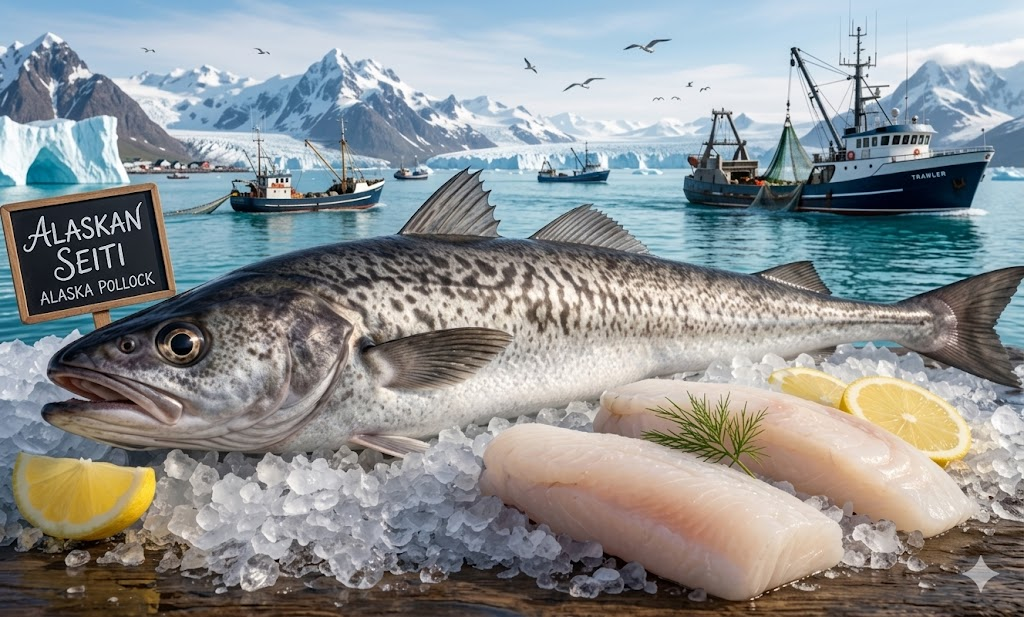
Alaskan seiti, commonly known in global markets as Alaska pollock, belongs to the cod family and stands as one of the most consumed, sustainable, and nutritionally rich whitefish species on Earth — a staple in homes, restaurants, and food factories across every continent.
Many people encounter this fish every day without realizing it. It appears as flaky white fillets in the frozen food aisle, as the core ingredient of fish sticks served in school cafeterias, and as the base of the surimi used to make imitation crab meat found across sushi bars and seafood buffets. Despite its enormous presence in global diets, alaskan seiti remains surprisingly unfamiliar by name to a large portion of the consumers who eat it regularly. That disconnect between recognition and consumption is part of what makes this fish one of the most fascinating stories in modern food production.
The term “seiti” originates primarily from Nordic and European seafood markets, where it has become a commonly used label for what English-speaking regions call Alaska pollock or walleye pollock. Both names refer to the same species, scientifically classified as Gadus chalcogrammus, a semi-pelagic schooling fish belonging to the family Gadidae. The fish was reclassified multiple times over the past century, spending decades under the genus Theragra before DNA research confirmed its close genetic relationship to Atlantic cod, resulting in its return to the Gadus classification in 2014. That scientific backstory adds depth to a species often dismissed as just another affordable white fish.
This comprehensive guide covers everything worth knowing about alaskan seiti — from its natural habitat and physical characteristics to its detailed nutritional profile, proven health benefits, sustainable fishing credentials, culinary versatility, global economic importance, and practical tips for buying, storing, and cooking it at home.
What Is Alaskan Seiti and Why Does the Name Matter?
Understanding the naming history of alaskan seiti helps clarify a great deal of the confusion that surrounds it in markets, restaurants, and online recipe platforms. The word “seiti” is predominantly used in Scandinavian, Finnish, and broader European seafood contexts, where it refers to pollock species that are closely related to cod but distinguishable by texture, flavor intensity, and market price. When the “Alaskan” qualifier is added, the term narrows to Alaska pollock, harvested specifically from North Pacific waters.
The importance of the name extends beyond linguistics. Consumer perception, marketing strategy, and international trade all intersect around what a fish is called. Research in food science has shown that the name given to a fish product directly influences purchasing decisions and perceived value. Alaska pollock was once seen as a lower-tier fish compared to cod, but rebranding efforts — including the widespread use of regional designations like “alaskan seiti” in European markets — have helped shift consumer attitudes toward viewing it as a premium, responsibly sourced product.
The Marine Stewardship Council (MSC), one of the world’s foremost seafood sustainability certification bodies, has certified major Alaska pollock fisheries. That certification, combined with clear labeling using designations like alaskan seiti, helps consumers make informed choices. When buyers see that label paired with sustainability credentials, the purchasing decision becomes easier and more confident. matarecycler
Natural Habitat: Where Alaskan Seiti Lives and Thrives
The natural home of alaskan seiti is one of the most productive marine environments on Earth. This fish thrives in the cold, nutrient-dense waters of the North Pacific Ocean, with its highest population concentrations found in the eastern Bering Sea, the Gulf of Alaska, and the Aleutian Islands chain. Smaller but significant populations also exist in the Sea of Okhotsk, along the Russian coast, and in waters surrounding Japan and Korea.
Water temperature plays a decisive role in the fish’s distribution and behavior. Alaskan seiti prefers temperatures between 2°C and 9°C (approximately 35°F to 48°F), conditions that support the dense populations of zooplankton, krill, and small fish on which the species depends for nutrition. These cold, clean, deep waters contribute directly to the firm, white flesh and neutral flavor that make the fish so commercially valuable.
The species exhibits a behavior known as diel vertical migration — it moves between ocean depths in a daily cycle that follows the movement of its food sources. During periods of food abundance, such as in summer months, alaskan seiti school near shallower water where plankton blooms occur. During winter, when food concentrates in deeper layers, the fish follow, descending to greater depths. This migratory pattern is important for fisheries management because it influences when and where commercial catches are most efficiently made.
Alaskan seiti is a highly social, schooling species. These schools can number in the millions, creating enormous biomass concentrations that are commercially significant. It is precisely this schooling behavior — combined with the fish’s abundance in well-managed waters — that has made large-scale, sustainable harvesting possible. The eastern Bering Sea population alone has supported average annual catches of more than 1.2 million metric tons in recent decades, representing the single largest catch of any fish species in the United States.
Physical Characteristics and Species Identity
Physically, alaskan seiti presents the streamlined, elongated body shape characteristic of the cod family. It has three dorsal fins and two anal fins, a small chin barbel, and a distinctive speckled or mottled coloration along its back that transitions to a pale, silvery-white underside. Adults typically measure between 40 and 60 centimeters in length, though some individuals grow larger in optimal conditions.
Compared to Atlantic cod, which can reach considerable sizes and commands a premium price in global markets, alaskan seiti is generally smaller and more slender. However, it compensates in terms of sheer abundance, processing efficiency, and adaptability. The flesh of alaskan seiti separates cleanly from the bone, freezes exceptionally well without significant quality degradation, and can be processed into fillets, minced blocks, or surimi with high efficiency — characteristics that explain its dominance in industrial seafood manufacturing.
Young alaskan seiti, particularly those under 60 millimeters in length, feed almost exclusively on copepods. As the fish mature, their diet expands to include krill, small fish, and amphipods. This diet progression is nutritionally significant because it directly influences the fatty acid and micronutrient profile of the fish at different life stages, contributing to the lean, high-protein, moderately omega-3-rich nutritional composition that consumers prize.
The Nutritional Profile of Alaskan Seiti
One of the most compelling reasons for the popularity of alaskan seiti in health-conscious markets is its exceptional nutritional density relative to its caloric content. This fish is a textbook example of a lean protein source — high in essential amino acids, low in total fat, and rich in several critical micronutrients that support a wide range of bodily functions.
Macronutrient Breakdown (per 100g cooked serving, approximate):
| Nutrient | Amount |
|---|---|
| Calories | 92 kcal |
| Protein | 19–20g |
| Total Fat | 1–2g |
| Saturated Fat | 0.2g |
| Carbohydrates | 0g |
| Omega-3 Fatty Acids | 0.5–0.8g |
Key Micronutrients:
| Micronutrient | Role in Health |
|---|---|
| Vitamin B12 | Nerve function, red blood cell formation |
| Selenium | Antioxidant defense, thyroid support |
| Phosphorus | Bone strength, energy metabolism |
| Iodine | Thyroid hormone production |
| Niacin (B3) | Energy metabolism, skin health |
| Potassium | Heart function, fluid balance |
The protein quality of alaskan seiti is particularly noteworthy. It delivers a complete amino acid profile — meaning it contains all nine essential amino acids that the human body cannot synthesize on its own. This makes it functionally equivalent to other high-quality animal proteins like chicken breast or egg whites in terms of biological value, but with a lower caloric density that suits weight management and caloric control goals.
The omega-3 content, while lower than that of oily fish like salmon or mackerel, is still meaningful. Regular consumption of the EPA and DHA found in alaskan seiti supports cardiovascular function by helping maintain healthy triglyceride levels and reducing systemic inflammation. For populations that consume this fish multiple times per week — as is common in parts of East Asia, Scandinavia, and North America — the cumulative omega-3 intake is nutritionally significant.
Selenium is perhaps the most underappreciated micronutrient in alaskan seiti’s profile. This trace mineral functions as a cofactor for glutathione peroxidase, one of the body’s primary antioxidant enzymes. Adequate selenium intake has been associated with reduced oxidative stress, better immune function, and protection against certain chronic diseases. A single serving of alaskan seiti can deliver a substantial portion of the recommended daily selenium intake.
Health Benefits of Eating Alaskan Seiti Regularly
The nutritional composition of alaskan seiti translates into a meaningful set of health benefits when the fish is consumed as part of a balanced diet. These benefits span cardiovascular health, metabolic function, immune support, and cognitive performance.
Heart Health
The combination of omega-3 fatty acids, lean protein, and low saturated fat content makes alaskan seiti genuinely heart-healthy. Diets high in lean fish proteins and omega-3 fatty acids have been associated in numerous clinical studies with lower rates of coronary artery disease, reduced blood pressure, and improved blood lipid profiles. The fish contributes these benefits without the elevated cholesterol and saturated fat loads associated with many red meat proteins.
Weight Management and Metabolic Health
With approximately 92 calories per 100 grams and 19–20 grams of protein in the same serving, alaskan seiti delivers exceptional satiety per calorie. Protein is the most satiating macronutrient, and high-protein, low-calorie foods have strong evidence behind their role in appetite control and body weight regulation. For individuals following calorie-deficit diets, fitness-focused meal plans, or metabolic health programs, this fish is practically ideal.
Brain Function and Cognitive Support
The omega-3 fatty acids DHA and EPA found in alaskan seiti are structural components of brain cell membranes and play documented roles in supporting cognitive function, mood regulation, and neuroprotection. Regular seafood consumption has been correlated with lower rates of cognitive decline in aging populations across multiple longitudinal studies. The vitamin B12 content adds additional neurological support, as this vitamin is essential for myelin sheath maintenance and proper nerve signaling.
Thyroid and Immune Function
The iodine and selenium content in alaskan seiti makes it valuable for thyroid health. Iodine is the essential building block of thyroid hormones T3 and T4, which regulate metabolic rate, growth, and development. Selenium, as mentioned, acts as an antioxidant and immune modulator. Together, these micronutrients contribute to a healthy hormonal environment and robust immune defense.
Low Mercury and Safety for Regular Consumption
One of the frequently raised concerns about seafood is mercury contamination, which is a genuine risk with certain large predatory species like swordfish, shark, king mackerel, and even some tuna. Alaskan seiti, however, is classified as a low-mercury fish by health authorities including the U.S. Food and Drug Administration and the Environmental Protection Agency. It is safe for frequent consumption, including for pregnant individuals and young children when consumed according to standard dietary guidelines.

Sustainability: Why Alaskan Seiti Is a Model for Responsible Fishing
The sustainability story behind alaskan seiti is one of the most impressive in global commercial fishing. At a time when many major fish stocks around the world face serious pressure from overfishing, habitat destruction, and climate-related ecosystem changes, Alaska pollock fisheries stand out as a rare example of science-based management that genuinely works.
The Alaska pollock fishery in the eastern Bering Sea is the largest single-species fishery in the United States by volume, yet it operates under some of the most stringent regulatory frameworks in the world. Annual catch quotas are set based on comprehensive acoustic and trawl surveys that assess population size, age structure, and reproductive health. These stock assessments are conducted by the National Oceanic and Atmospheric Administration (NOAA) in partnership with fishing industry stakeholders and independent scientific reviewers.
The Marine Stewardship Council has granted MSC certification to major Alaska pollock fisheries, recognizing that their fishing practices meet global standards for sustainability. This certification is not permanent — it requires ongoing audits and compliance reviews to maintain. The continued certification of Alaska pollock fisheries reflects a commitment to maintaining the ecological balance of the Bering Sea ecosystem while meeting global demand for alaskan seiti products.
Key sustainability features of well-managed alaskan seiti fisheries include:
- Science-based quota setting — Annual total allowable catch limits are derived from population modeling and updated survey data, not historical averages or political compromise.
- Observer coverage — Independent observers are stationed aboard commercial fishing vessels to monitor catches, enforce regulations, and collect scientific data.
- Bycatch reduction — Fishing gear designs and operational practices are regularly refined to minimize the incidental catch of non-target species, including other fish, seabirds, and marine mammals.
- Ecosystem-level management — Quotas account not just for pollock population health but also for the role of alaskan seiti as prey for marine mammals like Steller sea lions and seabirds like murres, maintaining the broader food web integrity.
Climate change represents a growing challenge for the long-term sustainability of alaskan seiti fisheries. Warming ocean temperatures in the Bering Sea are altering the distribution of plankton, shifting where pollock can find adequate food, and potentially changing spawning success rates. Fisheries managers are incorporating climate projections into stock assessments, attempting to build adaptive management strategies that account for an increasingly uncertain environmental future.
Commercial and Economic Importance of Alaskan Seiti
The economic footprint of alaskan seiti extends across multiple industries, supply chains, and national economies. Approximately 3 million metric tons of Alaska pollock are harvested globally each year, making it the world’s second most important fish species by total catch after Peruvian anchoveta. The U.S. alone accounts for more than 1 million metric tons annually from eastern Bering Sea fisheries.
This volume translates into a multi-billion-dollar industry that encompasses fishing vessel operations, at-sea processing, onshore processing plants, cold chain logistics, food manufacturing, and retail distribution. Commercial fishing communities in Alaska, particularly in ports like Dutch Harbor (Unalaska), depend heavily on the pollock fishery for economic livelihoods. Dutch Harbor has historically ranked as the highest-volume commercial fishing port in the United States for decades, driven primarily by alaskan seiti harvests.
Major global food companies rely on alaskan seiti as a core ingredient in their product lines. Fast-food chains use it in fish sandwiches and fish fillet products. Frozen meal manufacturers incorporate it into breaded fish portions, fish sticks, and prepared seafood dishes. Surimi producers use it as the primary raw material for imitation crab, imitation lobster, and other analog seafood products that are consumed widely across Asia, North America, and Europe.
The surimi industry deserves special attention within the commercial story of alaskan seiti. Surimi — a paste made from mechanically separated fish flesh that is washed, blended with additives, and formed into various shapes — accounts for an enormous proportion of global pollock usage. Japanese, Korean, and Chinese markets consume vast quantities of surimi-based products, and the production of these foods has created a commercially critical link between North Pacific fisheries and East Asian food cultures.
Culinary Uses and Versatility in the Kitchen
Part of what makes alaskan seiti so commercially successful and broadly consumed is its extraordinary culinary versatility. Its mild flavor — described by cooks and food scientists alike as clean, slightly sweet, and neutral — means it neither competes with nor overpowers the other ingredients in a dish. It absorbs marinades, spices, and seasonings efficiently, making it adaptable across food cultures from Southeast Asian to Mediterranean to Latin American.
Flavor and Texture Profile
Raw alaskan seiti fillets have a translucent, slightly pinkish-white appearance that turns opaque and bright white when cooked. The texture before cooking is firm enough to handle without falling apart but delicate enough to flake easily once heat is applied. This balance of firmness and tenderness makes it suitable for a wide range of cooking applications that would be difficult with a more fragile white fish.
The flavor can be described as subtly sweet with no strong oceanic or “fishy” aftertaste — a quality particularly appealing to individuals who enjoy seafood but prefer less assertive fish flavors. Children tend to accept alaskan seiti more readily than stronger-flavored options, making it a practical choice for family meals.
Cooking Methods That Work Best
| Cooking Method | Result | Best For |
|---|---|---|
| Baking | Moist, flaky texture | Healthy meals, meal prep |
| Pan-frying | Golden crust, tender interior | Quick weeknight dinners |
| Deep-frying | Crispy exterior | Fish and chips, fish sticks |
| Steaming | Delicate, light texture | Asian-inspired dishes |
| Grilling | Lightly charred, firm flakes | Outdoor cooking, tacos |
| Poaching | Silky, moist finish | Elegant preparations, soups |
Recipe Applications Around the World
The global reach of alaskan seiti in cooking is remarkable. In the United States and United Kingdom, it appears most commonly in fish and chips, fish sandwiches, fish tacos, and breaded fillets. In Japan and Korea, it forms the basis of various surimi products, fish cake preparations (eomuk in Korean cuisine), and lightly seasoned steamed dishes. In Russian cuisine, pollock is prepared baked with vegetables or stewed in tomato-based sauces. In Germany and other Central European countries, breaded pollock fillets are a fixture of home cooking and school lunch programs.
For home cooks working with alaskan seiti for the first time, a few practical tips improve results consistently:
- Pat fillets completely dry before applying any cooking technique — excess surface moisture causes steaming rather than browning, undermining texture development.
- Season generously, as the mild flavor of the fish supports — rather than conflicts with — robust spice profiles, acidic components like lemon juice or vinegar, and aromatic herbs.
- Avoid overcooking, which is the most common mistake with lean white fish. At an internal temperature of 63°C (145°F), the flesh is perfectly done, moist, and flaky. Beyond that temperature, it becomes dry and chalky quickly.
- Frozen alaskan seiti should be thawed slowly in the refrigerator overnight rather than under running water or in the microwave, which can partially cook or unevenly defrost the fillets.
How Alaskan Seiti Compares to Other Popular Whitefish
Consumers who are choosing between alaskan seiti and other white fish options benefit from understanding the genuine differences between these species in terms of flavor, nutrition, price, and sustainability. The comparison clarifies where alaskan seiti holds genuine advantages and where other fish might be preferable depending on the specific need.
Alaskan Seiti vs. Atlantic Cod
Atlantic cod is perhaps the closest relative and most natural comparison point for alaskan seiti. Cod has a slightly firmer texture and a marginally more pronounced flavor but is functionally similar in most culinary applications. The critical difference lies in price and sustainability. Atlantic cod stocks in many regions have been severely depleted by decades of overfishing, making them an expensive and environmentally concerning choice. Alaskan seiti is typically considerably more affordable and harvested from far more robustly managed fisheries, giving it a significant ecological and economic advantage.
Alaskan Seiti vs. Haddock
Haddock is widely beloved in British and North American cuisine, particularly in traditional fish and chips and chowder recipes. It has a slightly sweeter, more distinctive flavor than alaskan seiti and a texture that some find preferable for certain applications. However, haddock is more fragile during cooking — it breaks apart more easily than pollock — and tends to command a higher price point. Alaskan seiti is more resilient and more affordable, with a sustainability profile that is generally comparable or superior.
Alaskan Seiti vs. Tilapia
Tilapia is frequently presented as the other major budget-friendly, mild white fish in global markets. The two are often interchangeable in simple preparations, but they come from very different production contexts. Most tilapia is farmed, with environmental and quality concerns that vary considerably by country of origin. Alaskan seiti is wild-caught from one of the world’s most tightly regulated fisheries, which gives it a provenance advantage. Nutritionally, tilapia has a less favorable omega-3 to omega-6 fatty acid ratio, while alaskan seiti offers a cleaner omega-3 profile.
Alaskan Seiti vs. Salmon
The comparison with salmon highlights the different roles these fish play in healthy diets rather than a direct competitive relationship. Salmon is an oily, richly flavored fish with a higher fat content and substantially higher omega-3 concentrations than alaskan seiti. It is an excellent source of omega-3s but is also higher in calories and significantly more expensive. Alaskan seiti occupies the complementary role of a lean protein that can be consumed frequently and affordably without the caloric density of salmon, making the two fish useful alongside each other in a varied seafood diet rather than as mutually exclusive alternatives.

Buying and Storing Alaskan Seiti: A Practical Consumer Guide
Making good purchasing decisions about alaskan seiti requires understanding the different forms in which it is sold, how to evaluate quality, and how to store it correctly to preserve freshness and nutritional value.
Forms Available in the Market
Alaskan seiti is sold in a variety of forms that suit different cooking preferences and convenience needs. Fresh fillets are available in coastal regions and areas with strong cold chain infrastructure but are less common than frozen options given the geographic distance between North Pacific fishing grounds and most consumer markets. Individually quick-frozen (IQF) fillets represent the most practical and commonly available form — each fillet is frozen separately immediately after processing aboard fishing vessels or in onshore facilities, preserving quality effectively.
Value-added products derived from alaskan seiti include breaded fillets, fish sticks, fish portions for food service, surimi blocks, and ready-to-cook preparations marinated with various seasoning profiles. These convenience products dominate household consumption in many markets and account for a significant share of total alaskan seiti usage globally.
Quality Indicators to Look For
When purchasing frozen alaskan seiti fillets, several visual and packaging indicators help assess quality before purchase. The packaging should be intact with no signs of freezer burn — white, dry, crystalline patches on the fish surface that indicate temperature fluctuations during storage. High-quality frozen fillets should have a uniform ivory-white color with no discoloration, strong odors through the packaging, or excessive ice crystal buildup that would indicate thawing and refreezing.
MSC certification labels on packaging signal that the fish was sourced from a sustainably managed fishery that meets defined ecological and management standards. This certification label is one of the most reliable indicators of responsible sourcing available to consumers.
Storage Best Practices
Fresh fillets should be stored in the coldest part of the refrigerator and used within one to two days of purchase. Frozen fillets maintain quality for up to six months in a properly calibrated home freezer operating at -18°C (0°F) or below. The key to preserving quality in frozen storage is minimizing the fish’s exposure to air — vacuum-sealed packaging or tightly wrapped fillets in airtight containers significantly reduce the rate of freezer burn and flavor degradation over time.
Alaskan Seiti in the Global Food System: Future Outlook
The future role of alaskan seiti in global food systems is shaped by several converging trends that suggest continued and possibly growing importance for this species over the coming decades. Population growth, protein security concerns, sustainability imperatives, and shifting consumer preferences all point in directions favorable to expanded demand for well-managed, affordable, nutritious wild-caught fish.
Global protein demand is projected to increase substantially by 2050 as the world population approaches 10 billion. Land-based protein production — whether livestock or plant-based — faces significant resource constraints, including water usage, land availability, greenhouse gas emissions, and feed conversion inefficiencies. Wild-caught fish from well-managed oceanic fisheries represent one of the more resource-efficient protein production systems available, and alaskan seiti sits at the most favorable intersection of volume, management quality, and nutritional value within that category.
The zero-waste processing movement is increasingly influencing how alaskan seiti is used commercially. Historically, significant portions of the fish — including heads, frames, and viscera — were discarded or converted into low-value meal products after filleting. Contemporary processing operations are investing in technologies that extract value from these byproducts through fish oil production for omega-3 supplements, collagen extraction for the beauty and pharmaceutical industries, and high-protein hydrolysates for nutraceutical applications. This shift toward full-fish utilization improves the economic and environmental efficiency of every ton harvested.
Innovation in product development is also extending the culinary reach of alaskan seiti into new market segments. High-protein food manufacturers are incorporating pollock-derived proteins into sports nutrition products, protein powders, and functional food formulations. The clean flavor profile of alaskan seiti makes it more suitable for these applications than strongly flavored fish, which can introduce unwanted taste characteristics into finished products.
Environmental Challenges and the Path Forward
While the sustainability record of alaskan seiti fisheries is genuinely impressive by global commercial fishing standards, it would be inaccurate to suggest that challenges do not exist. Honest engagement with these challenges is essential for maintaining consumer trust and ensuring the long-term viability of the fishery.
Climate change is the most significant and least controllable threat. Bering Sea water temperatures have been increasing, and the extent of seasonal sea ice — which influences the distribution and abundance of the cold-water zooplankton that form the base of the pollock food web — has been declining. These changes are shifting the geographic distribution of alaskan seiti populations northward and may be affecting recruitment success in some years. Fisheries managers are developing more climate-responsive stock assessment models that can account for this variability.
Bycatch — the incidental capture of non-target species during pollock trawling operations — remains an ongoing management priority. While Alaska pollock fisheries have improved bycatch performance significantly over the past two decades through gear modifications, spatial management measures, and industry-funded bycatch reduction programs, the incidental capture of species like Chinook salmon and halibut continues to attract scrutiny from conservation groups and competing fishing sectors.
The relationship between alaskan seiti abundance and marine mammal populations — particularly Steller sea lions, which were listed as endangered in their western population — has been the subject of ongoing scientific and regulatory debate for decades. Managing pollock harvest levels in ways that do not compromise marine mammal food supply requires continuous monitoring and adaptive quota adjustments.

Frequently Asked Questions
What exactly is alaskan seiti?
Alaskan seiti is a market name, particularly common in European and Nordic seafood contexts, for Alaska pollock — a wild-caught white fish scientifically known as Gadus chalcogrammus. It belongs to the cod family and is one of the most widely harvested and consumed fish species in the world.
Is alaskan seiti the same as cod?
It is closely related to cod but a distinct species. Both belong to the Gadidae family, and their flesh shares similar qualities — white, flaky, and mild — but alaskan seiti is generally more affordable and harvested in substantially greater volumes from better-managed fisheries than Atlantic cod.
Is alaskan seiti healthy to eat regularly?
Yes. It is a lean, high-protein fish with notable amounts of omega-3 fatty acids, vitamin B12, selenium, iodine, and phosphorus. It is low in calories, low in fat, and classified as a low-mercury fish by major health authorities, making it safe and beneficial for regular consumption, including for pregnant individuals and children following standard guidelines.
Where does alaskan seiti come from?
It is wild-caught from the cold waters of the North Pacific Ocean, primarily the eastern Bering Sea and Gulf of Alaska, though populations also exist in the Sea of Okhotsk and surrounding North Pacific waters near Russia, Japan, and Korea.
What does alaskan seiti taste like?
Its flavor is mild, clean, and subtly sweet, with no strong ocean or “fishy” aftertaste. The texture is tender and flakes easily when cooked, making it broadly appealing to adults, children, and people who are new to eating seafood.
Is alaskan seiti sustainable?
Major Alaska pollock fisheries are among the most rigorously managed in the world, with science-based catch quotas, extensive observer coverage, and MSC certification for many operations. It is widely considered a responsible and sustainable seafood choice.
How should I cook alaskan seiti?
It is versatile and responds well to baking, pan-frying, grilling, steaming, deep-frying, and poaching. The key to excellent results is avoiding overcooking — the fish reaches perfect doneness at an internal temperature of 63°C (145°F) and should be served immediately for optimal texture.
What products are made from alaskan seiti?
It is used in fish sticks, frozen fillets, breaded fish portions, fish sandwiches, surimi (the base for imitation crab and other analog seafood products), fish chowder, fish tacos, and increasingly in protein supplements and nutraceutical applications.
How does alaskan seiti compare nutritionally to salmon?
Salmon is higher in total fat and omega-3 fatty acids, making it richer in those specific nutrients. Alaskan seiti is leaner, lower in calories, and less expensive, making it a complementary rather than competing choice — ideal for high-frequency consumption in a balanced diet that also includes oily fish like salmon on occasion.
Can I find alaskan seiti with MSC certification?
Yes. Many Alaska pollock products available in European, North American, and Asian markets carry MSC certification, which indicates responsible sourcing from fisheries that meet defined sustainability standards. Look for the blue MSC label on packaging when making purchasing decisions.
Conclusion
Few fish species in the global food system combine the qualities of alaskan seiti as effectively as it does — sustainable wild-catch credentials, strong nutritional density, broad culinary versatility, consumer-friendly flavor, and genuine affordability. It feeds millions of people daily across every major continent, often without those consumers being aware of the fish by its precise name. From fish sticks in a school lunch to surimi in a sushi roll to a baked fillet at a dinner table in Helsinki or Seoul or São Paulo, this one species touches an extraordinary range of human eating experiences.
The sustainability framework around alaskan seiti fishing represents one of modern fisheries management’s genuine success stories — not perfect, and not immune to the emerging pressures of a changing climate, but meaningfully better than most large-scale commercial fisheries. For consumers who care about the environmental impact of their food choices, this fish offers a way to eat well while supporting ocean stewardship.
Whether you are encountering alaskan seiti for the first time or seeking a deeper understanding of a fish you have eaten for years without knowing its name, the case for incorporating it into your regular diet is clear: it is nutritious, affordable, responsibly produced, easy to cook, and genuinely delicious when prepared with care. It deserves far more recognition than it typically receives.